Don’t let your injuries hold you back
Strong, resilient muscle is the foundation of an active life. We support muscle health, recovery, and long-term physical confidence through clinically guided care.
.avif)
.avif)

Strength and recovery built for your life
Your body is personal and so is your recovery. At Get Limitless, we create personalised care plans designed to support muscle strength, mobility, and injury resilience, helping you move better now and stay active for years to come.
.avif)
Stronger muscles support a longer, more resilient life
Maintaining and rebuilding muscle is not just about performance. It is about protecting your future health and staying capable as you age.
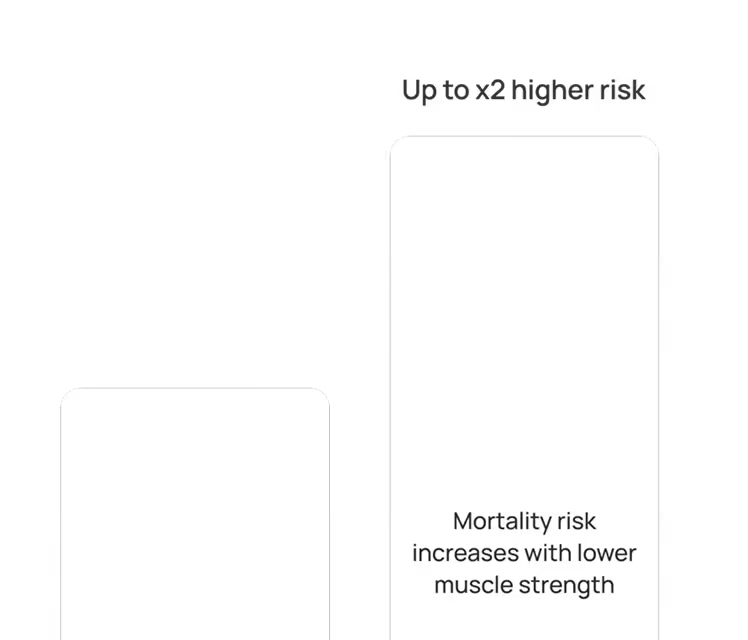
Lower muscle strength is linked to higher health risk
Australian cohort research found that individuals with lower muscle strength had approximately 1.5 to 2 times higher risk of all cause mortality, independent of age and body weight.
Support is available to help rebuild strength safely and progressively.

How it works
Complete your intake
Start by completing a short online intake covering your health history, goals, and symptoms. This helps determine eligibility and guide next steps.

.svg)
Test what matters
Complete our Hormone Health blood panel through one our network of 4000+ Australian pathology partners, guided by your health goals and clinical history.

Understand your results
Your results are uploaded to our secure patient portal and reviewed by AHPRA-registered medical practitioner.

An actionable plan
Your practitioner will recommend a personalised care plan which may include treatment, lifestyle guidance, and ongoing monitoring.

What we test to understand your Muscle Health
Muscle injury and recovery are influenced by more than just training load. Inflammation, nutrient status, oxygen delivery, and systemic stress all play a role in how quickly and effectively tissue repairs.
Potential benefits you may notice

Do you recognise any of these signals
Answer a few quick questions to see whether clinical support for muscle health or injury recovery may be appropriate for you.
.avif)

.svg)
What to expect from muscle health and injury support
Supports tissue recovery
Supports mobility and joint function
Improves recovery efficiency
Builds long term strength resilience
Why muscle and injury care with Get Limitless
Treatment informed by comprehensive labs
We start with in-depth pathology to understand what’s happening beneath the surface. Results guide eligibility, dosing considerations, and ongoing monitoring. Care is based on evidence, not assumptions.
.avif)
Clinically guided,comprehensive testing
Where appropriate, pathology and clinical markers are used to assess factors linked to muscle resilience, recovery capacity, and tissue health. This allows clinicians toidentify gaps that may increase injury risk and guide preventative strategies overtime.
.avif)

.avif)
Convenient Australia-wide testing
Consultations, follow ups, and care coordination are delivered online, with access to pathology services through partner providers nationwide. This makes it easier to stay consistent with care while maintaining training and daily activity.


Ongoing care focused on prevention and performance
Support continues beyond initial recovery. Ongoing reviews help ensure progress is maintained, strength is rebuilt appropriately, and preventative strategies are in place to lower the likelihood of reinjury as activity levels increase.
.avif)
It’s more than a plan, It’s Personal
Weight loss isn’t one size fits all. Your biology and health history matter.
Your plan is built around your metabolic profile, guided by clinical testing and medical oversight, and adjusted as your body responds over time.
What this enables:

.avif)
Your muscle health journey
.avif)
.avif)

.avif)
Ongoing monitoring & optimisation
With continued medical oversight, clinicians may refine treatment based on blood results, symptoms reported, and individual response. Many patients reach a more consistent hormonal range during this period.
.avif)
Long-term management
Treatment becomes part of an ongoing care plan focused on maintaining appropriate hormone levels over time. Regular reviews help ensure therapy remains suitable, safe, and aligned with your health goals.
Frequently Asked Questions
What is muscle health and injury prevention care
Muscle health care focuses on building strength, resilience, and recovery to support movement and reduce the risk of injury. It combines assessment, ongoing monitoring, and personalised guidance to help your body tolerate training, work, and daily activity more effectively.
Who is this designed for
This is suitable for people recovering from injury, experiencing recurring muscle or joint pain, or looking to build stronger, more resilient muscle to reduce future injury risk. Eligibility is confirmed through a medical consultation.
How does muscle strength help prevent injury
Stronger muscles support joints, improve movement control, and reduce excessive load on tendons and connective tissue. Improving muscle strength and recovery capacity can lower the likelihood of strains, overuse injuries, and setbacks during training or everyday activity.
Can this help if I am not currently injured
Yes. Many people engage in muscle health care to support long term strength, mobility, and resilience even without a current injury. Preventative care can help maintain performance and reduce injury risk over time.
Is this a personalised approach
Yes. Care plans are built around your individual health history, movement demands, symptoms, and goals rather than a standard protocol.
How is care delivered
Consultations are delivered via telehealth, with ongoing reviews and monitoring where appropriate. Pathology or additional assessments may be arranged if clinically indicated.
How long does care typically last
Timeframes vary depending on your goals, injury history, and response to care. Some people engage short term for recovery, while others continue longer term to support strength and injury prevention.
What if I am not eligible for treatment
If treatment is not appropriate, you will be informed during your consultation and other options may be discussed.
How do I get started
You can begin by completing an online assessment to see if a consultation is right for you.
How often will I be reviewed
Follow up frequency depends on your treatment plan. Regular reviews help assess progress manage side effects and adjust treatment when needed.
Is everything done online
Consultations and ongoing care are delivered via telehealth. Pathology testing is completed through partner laboratories with results reviewed securely by your care team.
What if I am not eligible for treatment
If treatment is not appropriate your clinician may provide alternative recommendations or guidance focused on lifestyle prevention or further assessment.
How do I get started
Yes. Blood testing is essential to understand your hormone levels in context and to rule out other medical causes. Ongoing testing may be required to monitor response and safety.